
Updated September 24, 2026
Gray Blending vs. Gray Coverage: Which Is Right for Your Hair?
Seeing more gray but not sure what to ask for? Gray coverage hides it. Gray blending lets some of it stay and softens the line as it grows. This guide shows which choice fits your look, schedule and starting hair.
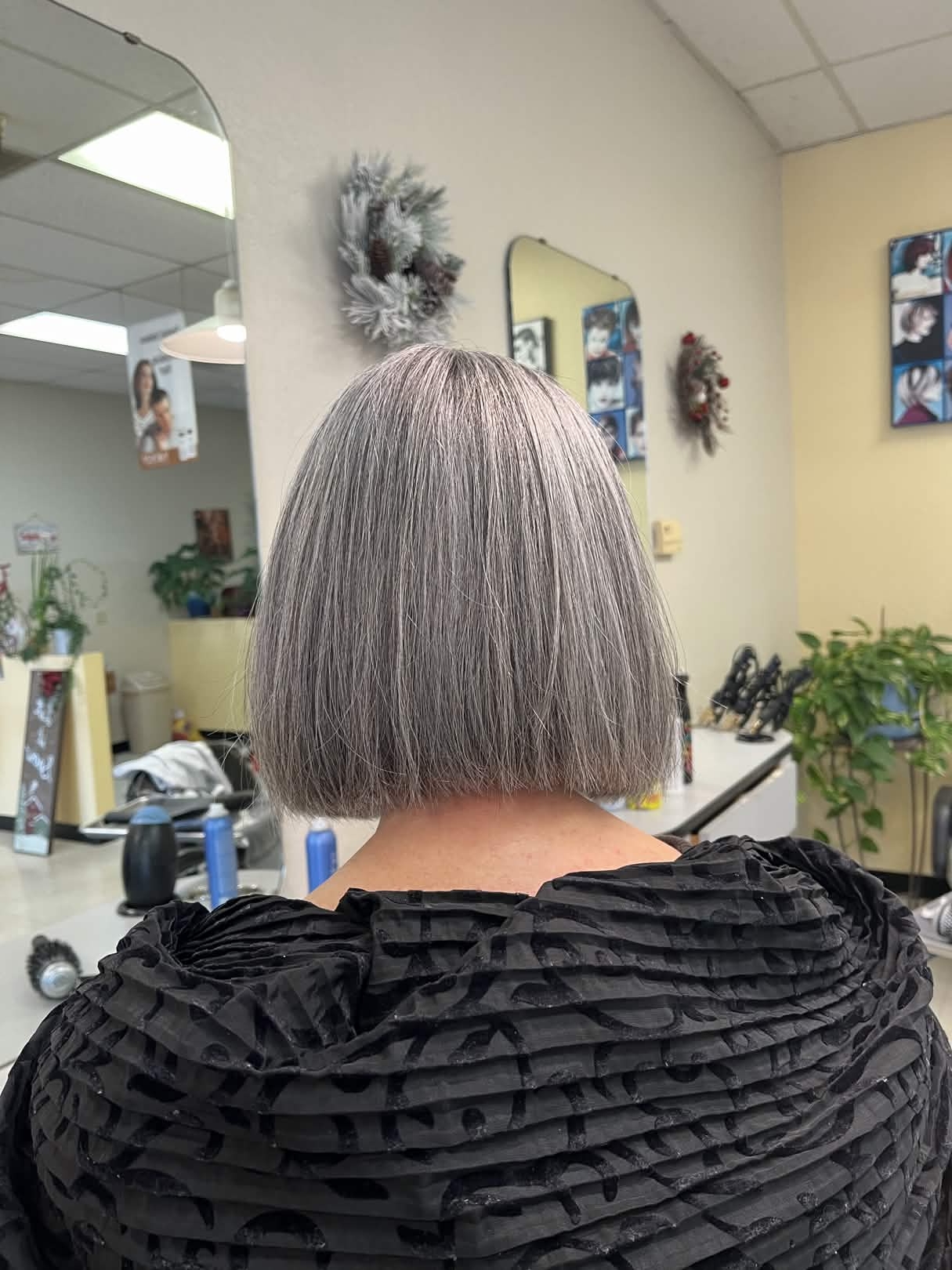
The short answer
The choice is not really about whether gray hair is “good” or “bad.” It is about how much gray you want to see, how sharp you want the root line to look and how often you want to maintain it.
Choose gray coverage if your priority is making the gray look consistently colored. Coverage creates a more uniform result, but new gray growth usually forms a clearer line at the roots and may lead to more frequent maintenance.
Choose gray blending if you are comfortable seeing some gray and want it integrated more softly. Blending can use carefully selected color, highlights, lowlights or tonal adjustments so the gray works with the surrounding hair instead of being concealed completely. The grow-out often looks softer, but the final result is not total coverage.
- Coverage hidesThe goal is a consistent colored result with little or no visible gray after the service.
- Blending integratesSome gray remains part of the finished look so regrowth can feel less abrupt.
- Neither is automaticYour starting shade, gray pattern, prior color and maintenance tolerance shape the plan.
At a glance
Gray blending vs. gray coverage
| Decision point | Gray blending | Gray coverage |
|---|---|---|
| Main goal | Integrate gray into the overall color | Conceal gray for a more uniform result |
| Gray after service | Some may remain intentionally visible | Little or none, depending on the agreed result and how the hair accepts color |
| Grow-out | Usually softer and less defined | Often a clearer root line as new gray grows |
| Common planning tools | Selected highlights, lowlights, tonal color or a combination | A root formula selected to create consistent coverage |
| Maintenance starting point | Often around 6–8 weeks, sometimes longer depending on the plan | Often around 4–6 weeks when consistent roots are the priority |
| Best fit | Clients comfortable with visible gray and a softer transition | Clients who want gray concealed as consistently as possible |
These time ranges are planning examples, not deadlines or guarantees. Hair growth, contrast, color history, service design and personal preference can shorten or extend the schedule.
Option one
What gray blending actually means
Gray blending is a goal, not one universal technique. The aim is to reduce the visual separation between naturally gray hair and the rest of the color while allowing at least some gray to remain part of the finished result.
A stylist may consider selected highlights to connect lighter strands with gray, lowlights to restore depth, a softer tonal formula, or a combination planned around the pattern already growing in. The right approach for scattered silver strands may be very different from the plan for concentrated gray at the hairline or a larger transition from previously dark color.
Blending may fit if you want:
- A softer line as new gray grows
- Dimension rather than one uniform shade
- Some natural silver to stay visible
- A gradual path toward wearing more gray
- Potentially more flexibility between root-focused appointments
Blending may disappoint if you expect:
- Every gray strand to disappear
- The exact same result on every gray pattern
- A one-visit correction of years of dark color
- No future toner, gloss or placement refreshes
- A guaranteed maintenance interval
Ask one precise question
Instead of asking only, “Can you blend my gray?” ask: “How much gray will still be visible after this service, and what will the roots look like in eight weeks?” That question makes the expected finish and grow-out much clearer.
Option two
What complete gray coverage is designed to do
Gray coverage is planned for clients who want gray hair to look colored rather than intentionally visible. The stylist selects a formula and application for the amount, pattern and resistance of the gray, then focuses the root service on new growth as it appears. “Resistance” simply means some gray strands do not accept color as easily as the surrounding hair.
The tradeoff is contrast. When fresh silver or white hair grows next to a darker colored shade, the root line can become noticeable quickly—especially around the part, temples and hairline. A client who wants those areas consistently covered may prefer a four-to-six-week starting schedule, while someone with lower contrast or more tolerance for visible regrowth may wait longer.
Coverage does not always mean coloring every strand from roots to ends
A root touch-up generally addresses new growth. Previously colored mid-lengths and ends may need a different service, such as a tonal refresh, or no additional color at that visit. The plan should respond to what each area of the hair actually needs.
Your decision framework
Five factors that matter more than the label
How much gray do you want to see?
“None” points toward coverage. “Some, but more intentional” points toward blending. Bring a photo that shows your acceptable amount—not only a color you like.
How strong is the contrast?
Bright silver against dark brown tends to reveal regrowth more clearly than gray growing beside a lighter, lower-contrast result. Contrast can matter as much as growth rate.
What is already in your hair?
Permanent color, box dye, lightener, highlights and other chemical services affect what can be changed and how quickly. Porosity—how easily the hair takes in and releases moisture or color—also affects how evenly a tone may hold.
How often will you return?
Choose a color plan you can maintain. If four-to-six-week root visits do not fit your schedule, say that before selecting a high-contrast coverage result.
What is your long-term goal?
Maintaining dark coverage, softening the root line and gradually growing toward natural silver are three different destinations. Each needs a different plan.
What can your hair reasonably handle?
Condition comes before the inspiration photo. A stylist needs to assess whether the desired change requires lightening or repeated processing and whether that is appropriate for your hair.
Put the choice in context
Common gray-hair scenarios
“I want every gray at my part and temples covered.”
Coverage is usually the more direct goal. Ask how often the root line is likely to bother you and whether a formula can be planned around the concentrated gray in those areas.
“I like my silver, but it looks disconnected from the rest.”
Blending may be the more useful conversation. Ask which placement would connect the gray with the surrounding shade without hiding all of it.
“I have years of dark color and want to become naturally gray.”
That is a transition project, not a standard root touch-up. The plan may involve staged changes, strategic cutting, selective lightening or simply allowing more natural growth. Share the complete color history before expecting a timeline.
“I want less maintenance but do not want to look fully gray.”
A lower-contrast blend may be worth discussing, but less maintenance does not mean no maintenance. Ask what will need refreshing first: roots, tone, lighter pieces or the haircut shape.
Prepare for the appointment
What to tell your colorist before choosing
A useful consultation should end with a shared definition of success. “Blend it” and “cover it” are not specific enough by themselves.
- Show how much gray you are comfortable seeing in the finished result.
- Point out the areas that bother you most: part, temples, hairline or all over.
- List recent permanent color, box dye, highlights, bleach, perms and straightening.
- Explain how frequently you can realistically return.
- Ask whether the result will need root color, toner, gloss, highlights or more than one type of appointment.
- Confirm current price, timing and at-home care before the service begins.
Keep the plan realistic
Maintenance is part of the color decision
The best-looking appointment result is not automatically the best long-term plan. Consider when roots will become visible, whether the tone may need refreshing before the placement does, and how your haircut affects the way silver and colored strands sit together.
Between appointments, use the wash, heat and product guidance given for your specific formula and hair condition. If you apply permanent color at home, tell your stylist exactly what you used and when. That history can change future color decisions.
For a personalized schedule, ask which part of your result is likely to need attention first—new growth, tone, lighter pieces or the haircut shape—then confirm the timing for your actual formula with your stylist.
Frequently asked questions
Gray blending and coverage questions
Does gray blending cover all gray hair?
No. Gray blending is generally intended to integrate gray with the surrounding hair rather than conceal every strand. If you want little or no visible gray immediately after the service, say that clearly and ask about coverage.
Does gray blending require less maintenance?
It often creates a softer grow-out and may allow more flexibility between root-focused visits, but it is not maintenance-free. Toner, gloss, highlights, lowlights or placement may still need periodic refreshing.
How often is complete gray coverage touched up?
Four to six weeks is a common starting point for clients who want consistent coverage, but it is not a rule. Growth rate, shade contrast, gray pattern and personal tolerance for visible roots all affect timing.
Can dark colored hair be transitioned to natural gray in one visit?
Not always. Years of dark permanent color can make a gray transition more complex, and major lightening may not be appropriate in one session. A stylist needs to assess the existing color, condition and target before outlining a staged plan.
Can I combine coverage and blending?
Sometimes a plan can address one area more completely while keeping dimension elsewhere, but the approach depends on the gray pattern and existing color. Bring reference photos and ask your stylist to explain which areas will be covered, softened or left visible.
Does Silver Star Salon offer hair color in Sacramento?
Yes. Silver Star provides women’s hair color, including highlights, balayage and dimensional color, at its Florin Road salon. Call (916) 383-2570 to discuss your starting hair, color history and desired gray result.

